Thursday, September 6, 2018

Something to Know - 6 September

Just in case anyone has not had the opportunity to read the op-ed from the NY Times, here it is.  This is a milestone in journalism, and just may have deep effect.
I have had issues trying to send the hard copy of articles from certain publications over this format.  If this resulting format arrives to you in a screwy and unreadable manner, 

I Am Part of the Resistance Inside the Trump Administration

I work for the president but like-minded colleagues and I have vowed to thwart parts of his agenda and his worst inclinations.

The Times today is taking the rare step of publishing an anonymous Op-Ed essay. We have done so at the request of the author, a senior official in the Trump administration whose identity is known to us and whose job would be jeopardized by its disclosure. We believe publishing this essay anonymously is the only way to deliver an important perspective to our readers. We invite you to submit a question about the essay or our vetting process here.


President Trump is facing a test to his presidency unlike any faced by a modern American leader.

It's not just that the special counsel looms large. Or that the country is bitterly divided over Mr. Trump's leadership. Or even that his party might well lose the House to an opposition hellbent on his downfall.

The dilemma — which he does not fully grasp — is that many of the senior officials in his own administration are working diligently from within to frustrate parts of his agenda and his worst inclinations. 


 I would know. I am one of them.

To be clear, ours is not the popular "resistance" of the left. We want the administration to succeed and think that many of its policies have already made America safer and more prosperous.

But we believe our first duty is to this country, and the president continues to act in a manner that is detrimental to the health of our republic.

That is why many Trump appointees have vowed to do what we can to preserve our democratic institutions while thwarting Mr. Trump's more misguided impulses until he is out of office.

The root of the problem is the president's amorality. Anyone who works with him knows he is not moored to any discernible first principles that guide his decision making. 

 Although he was elected as a Republican, the president shows little affinity for ideals long espoused by conservatives: free minds, free markets and free people. At best, he has 


invoked these ideals in scripted settings. At worst, he has attacked them outright.

In addition to his mass-marketing of the notion that the press is the "enemy of the people," President Trump's impulses are generally anti-trade and anti-democratic.


Don't get me wrong. There are bright spots that the near-ceaseless negative coverage of the administration fails to capture: effective deregulation, historic tax reform, a more robust military and more.

But these successes have come despite — not because of — the president's leadership style, which is impetuous, adversarial, petty and ineffective.

From the White House to executive branch departments and agencies, senior officials will privately admit their daily disbelief at the commander in chief's comments and actions. Most are working to insulate their operations from his whims.

Meetings with him veer off topic and off the rails, he engages in repetitive rants, and his impulsiveness results in half-baked, ill-informed and occasionally reckless decisions that have to be walked back.

"There is literally no telling whether he might change his mind from one minute to the next," a top official complained to me recently, exasperated by an Oval Office meeting at which the president flip-flopped on a major policy decision he'd made only a week earlier. 

The erratic behavior would be more concerning if it weren't for unsung heroes in and around the White House. Some of his aides have been cast as villains by the media. But in private, they have gone to great lengths to keep bad decisions contained to the West Wing, though they are clearly not always successful.

It may be cold comfort in this chaotic era, but Americans should know that there are adults in the room. We fully recognize what is happening. And we are trying to do what's right even when Donald Trump won't.

The result is a two-track presidency.

Take foreign policy: In public and in private, President Trump shows a preference for autocrats and dictators, such as President Vladimir Putin of Russia and North Korea's leader, Kim Jong-un, and displays little genuine appreciation for the ties that bind us to allied, like-minded nations.

Astute observers have noted, though, that the rest of the administration is operating on another track, one where countries like Russia are called out for meddling and punished accordingly, and where allies around the world are engaged as peers rather than ridiculed as rivals.

On Russia, for instance, the president was reluctant to expel so many of Mr. Putin's spies as punishment for the poisoning of a former Russian spy in Britain. He complained for weeks about senior staff members letting him get boxed into further confrontation with Russia, and he expressed frustration that the United States continued to impose sanctions on the country for its malign behavior. But his national security team knew better — such actions had to be taken, to hold Moscow accountable.

This isn't the work of the so-called deep state. It's the work of the steady state.

Given the instability many witnessed, there were early whispers within the cabinet of invoking the 25th Amendment, which would start a complex process for removing the president. But no one wanted to precipitate a constitutional crisis. So we will do what we can to steer the administration in the right direction until — one way or another — it's over.

The bigger concern is not what Mr. Trump has done to the presidency but rather what we as a nation have allowed him to do to us. We have sunk low with him and allowed our discourse to be stripped of civility.Senator John McCain put it best in his farewell letter. All Americans should heed his words and break free of the tribalism trap, with the high aim of uniting through our shared values and love of this great nation. 


 We may no longer have Senator McCain. But we will always have his example — a lodestar for restoring honor to public life and our national dialogue. Mr. Trump may fear such honorable men, but we should revere them.

There is a quiet resistance within the administration of people choosing to put country first. But the real difference will be made by everyday citizens rising above politics, reaching across the aisle and resolving to shed the labels in favor of a single one: Americans.

The writer is a senior official in the Trump administration.


--
****
Juan

"I fell in love with my country when I was a prisoner in someone else's."
- John McCain

Wednesday, September 5, 2018

Andy Borowitz


Satire from The Borowitz Report
Trump Furious That Woodward's Book Is Written at Seventh-Grade Reading Level

Photograph by Mandel Ngan / AFP / Getty

By Andy Borowitz10:17 A.M.

Photograph by Mandel Ngan / AFP / Getty
WASHINGTON (The Borowitz Report)—Donald J. Trump obtained an advance copy of Bob Woodward's new book Monday evening and was "furious" to discover that Woodward had written it at a seventh-grade reading level, a White House aide has confirmed.

The aide, who spoke on condition of anonymity, said that Trump was convinced that Woodward wrote the book for seventh-grade readers to make its assertions impossible for Trump to refute.

"Trump was turning page after page, becoming increasingly angry at its gratuitous use of a seventh-grade vocabulary," the aide said. "It was like it was written entirely in a secret code."

At one point, Trump became so frustrated trying to decipher the word "imbecilic" that he hurled the book across the room.

"Book bad!" he reportedly shouted.

According to the aide, Trump's daughter Ivanka is dreading that she will be called upon to read the Woodward book aloud to her father, as he has demanded she do with books by James Comey and Omarosa Manigault Newman.

"In the past, Ivanka has begged off by saying she was too busy running her company, but she can't do that anymore," the aide said.


--
****
Juan

"I fell in love with my country when I was a prisoner in someone else's."
- John McCain

Tuesday, September 4, 2018

Fwd: Today's Humor


Signage proofreaders should be paid more than minimum wage


--
****
Juan

"I fell in love with my country when I was a prisoner in someone else's."
- John McCain

Examples of the Betsy DeVoss School of Professional Proof Readers

Let's try this again:


--
****
Juan

"I fell in love with my country when I was a prisoner in someone else's."
- John McCain

From the Betsy DeVoss Accredited School of Proof Reading


-- 


****
Juan

"I fell in love with my country when I was a prisoner in someone else's."
- John McCain

Something to Know - 4 September


Screen Writers could never, ever come up with a story line that we get every day out of the White House.   Here's todays script for your review:

1 hour ago

Bob Woodward: Trump's top staff trashed him in private

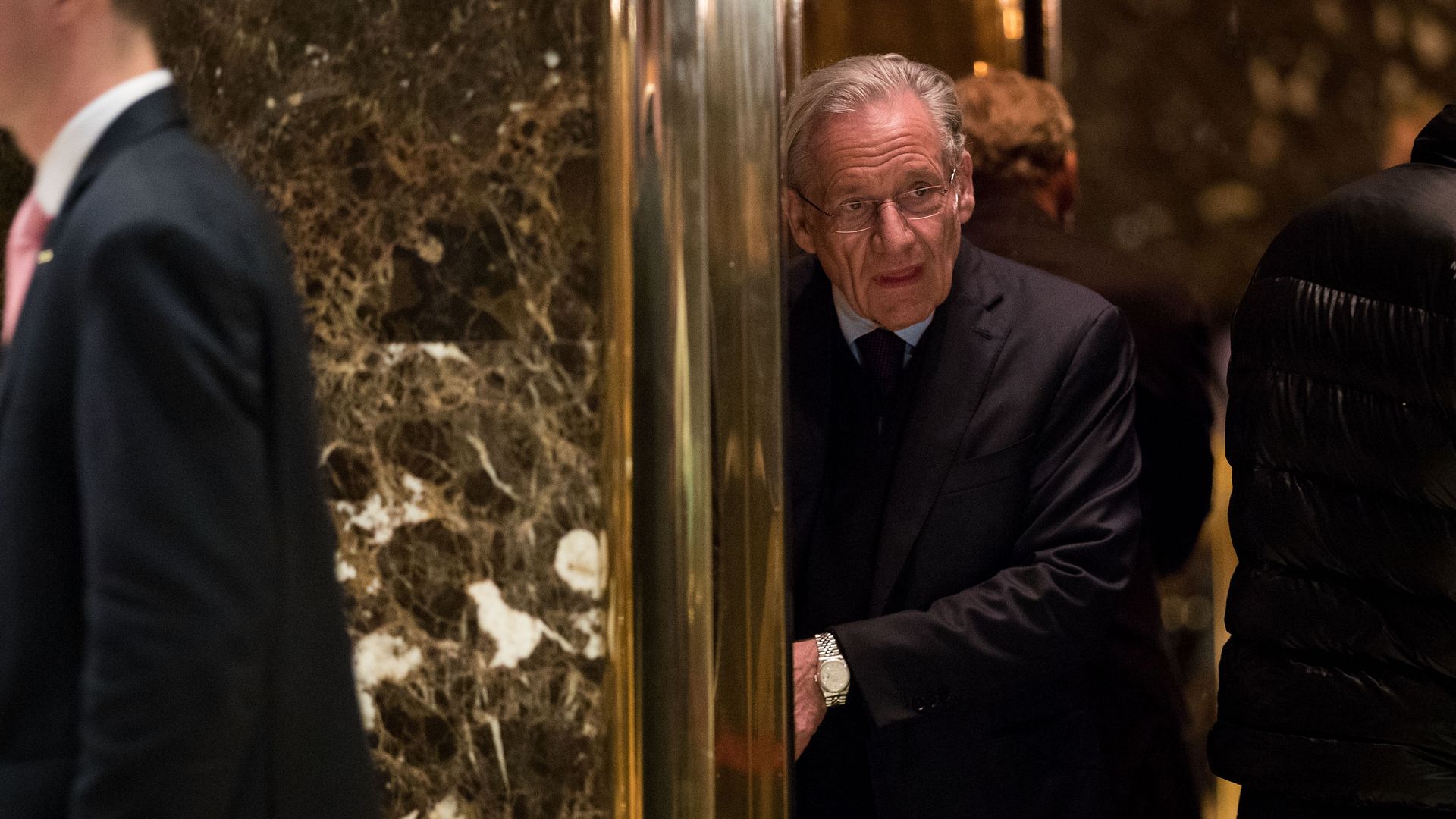
Bob Woodward at Trump Tower
Journalist Bob Woodward arrives at Trump Tower in 2017. Photo: Drew Angerer/Getty Images

Top Trump White House staffers like Jim Mattis and John Kelly privately trashed their boss as incompetent, even viewing him as a threat to national security, Bob Woodward reveals in his forthcoming book, "FEAR."

The big picture: Backbiting and blind quotes are a norm for a White House, and many claims from Michael Wolff's "Fire and Fury" didn't survive close inspection. But Woodward has reported on presidents for decades — with even Trump reportedly wanting to be interviewed.

Potential national security incidents:

  • After Trump left a meeting with Defense Secretary James Mattis on North Korea, Woodward recounts, "Mattis was particularly exasperated and alarmed, telling close associates that the president acted like — and had the understanding of — 'a fifth- or sixth-grader.'"
  • Former chief economic adviser Gary Cohn and former staff secretary Rob Porter repeatedly stole or hid documents from Trump's desk, including a draft letter that would have withdrawn the U.S. from a trade agreement with South Korea: "I stole it off his desk," Cohn told an associate. "I wouldn't let him see it. He's never going to see that document. Got to protect the country."
  • "After Syrian leader Bashar al-Assad launched a chemical attack on civilians in April 2017, Trump called Mattis and said he wanted to assassinate the dictator. "Let's fucking kill him! Let's go in. Let's kill the fucking lot of them," Trump said, according to Woodward."

Others include senior staffers' exasperation with Trump and many of Woodward's anecdotes highlight the toxic working environment at the White House:

  • "Trump's former personal lawyer John Dowd describes the President as "a fucking liar," telling Trump he would end up in an "orange jump suit" if he testified to special counsel Robert Mueller." Dowd claimed to Axios he never called Trump a "fucking liar."
  • Chief of Staff John Kelly on Trump: "He's an idiot. It's pointless to try to convince him of anything. He's gone off the rails. We're in Crazytown. I don't even know why any of us are here. This is the worst job I've ever had."

Often, the quotes Woodward obtained are from Trump himself, as others recount him berating or insulting some of his most publicly visible staff members:

  • Trump to Rudy Giuliani: "Rudy, you're a baby," Trump told the man who is now his personal attorney. "I've never seen a worse defense of me in my life. They took your diaper off right there. You're like a little baby that needed to be changed. When are you going to be a man?"
  • Trump on Attorney General Jeff Sessions: "This guy is mentally retarded. He's this dumb Southerner. … He couldn't even be a one-person country lawyer down in Alabama."
  • Trump to Secretary of Commerce Wilbur Ross: "I don't trust you. I don't want you doing any more negotiations. … You're past your prime."

The Post also published the transcript and audio of a call between Woodward and Trump last month, where Woodward tells the president that he repeatedly tried to request an interview via Sen. Lindsey Graham and senior White House staffers Kellyanne Conway and Raj Shah — apparently to no avail.

  • Trump: "I'm just hearing about it. And I heard — I did hear from [Sen.] Lindsey [Graham], but I'm just hearing about it. So we're going to have a very inaccurate book, and that's too bad. But I don't blame you entirely."
  • Woodward: "No, it's [inaudible] — it's going to be accurate, I promise."
  • Trump: "Yeah, okay. Well, accurate is that nobody's ever done a better job than I'm doing as president. That I can tell you. So that's ... And that's the way a lot of people feel that know what's going on, and you'll see that over the years. But a lot of people feel that, Bob."
  • Woodward: "I believe in our country, and because you're our president, I wish you good luck."
  • Trump: "Okay. Thank you very much, Bob. I appreciate it. Bye."

What's next, per Axios' Jonathan Swan: The White House has made no effort to pre-attack Woodward's reporting — and it appears they have no serious rapid response operation to deal with the book.


--
****
Juan

"I fell in love with my country when I was a prisoner in someone else's."
- John McCain

Andy Borowitz

White Man Hopes to Land Job Without Background Check

Photograph by Saul Loeb / AFP / Getty

Photograph by Saul Loeb / AFP / Getty
WASHINGTON (The Borowitz Report)—A fifty-three-year-old white man from Washington, D.C., is hoping to land a six-figure job for life without being subjected to a thorough background check, the man confirmed on Tuesday.

The man, Brett Kavanaugh, said that he was "pretty chill" about his upcoming job interview because he had been assured that "anything super damaging" had been removed from his H.R. file.

"There's some stuff in my past—especially, like, from the nineties—that would be kind of heinous if anyone looked into it," Kavanaugh said. "Fortunately, I know someone in H.R. and he took, like, a hundred thousand pages out of my file."

The Washington native said that he had been assured that his job interview would be led by a group of other white men who "won't ask me anything too hard."

"They were, like, 'Just smile a lot and nod your head and you're in, dude,' " he said.

Kavanaugh said he was "blown away" when he learned about the benefits package that comes with his prospective job. "When my friend in H.R. told me it was $255,300 a year for life, even after you retire, and no background check, I was, like, 'You have got to be shitting me,' " he said. "I don't care who you are. That's sweet."

--
****
Juan

"I fell in love with my country when I was a prisoner in someone else's."
- John McCain

Monday, September 3, 2018

Something to Know - 3 September

Phil Hands Comic Strip for August 29, 2018


As far as presidents go, it helps to put the current one into perspective with all of the previous occupants.   This is an informative little piece from the latest New Yorker

Measuring Presidents' Misdeeds

During Watergate, historians helped catalogue accusations made against past Presidents; their findings may be useful again.


Illustration by João Fazenda

In May, 1974, John Doar, the special counsel to the House Judiciary Committee, called the Yale historian C. Vann Woodward into his office and asked him to figure out just how badly Presidents had behaved in the past, and how they had answered accusations against them. A sense of scale seemed needed, a sense of magnitude. Doar gave Woodward until July to pull together a report, a catalogue of every charge of Presidential misconduct from 1789 to 1969. Was Richard Nixon worse than the worst? Or maybe not that bad? Historically speaking, what is "politics as usual," anyway?

It would be good to know the answers, with regard to the current occupant of the White House. The conviction of Paul Manafort, Donald Trump's former campaign manager, tars him, and the guilty plea of Michael Cohen, his former attorney, implicates him. Cohen has pleaded guilty to violating federal law at Trump's direction, making the President an unindicted co-conspirator. If Trump were not President, he would very likely be charged with a crime. What else he has done, and what can be proved, and what Republicans are willing to do about it remain to be seen; meanwhile, Trump's entire Presidency, from his Cabinet appointments to his foreign policy, lies in a muddle of money-grubbing, kowtowing, and influence-peddling.

Is Trump more of a crook than Nixon was? That's not the right question, but it's the inevitable one. Asked to measure Nixon against every President from George Washington to Lyndon B. Johnson, Woodward divided the work among fourteen historians. They were to exclude from consideration any allegations that appeared to be merely partisan or ideological, and confine themselves, as Woodward explained, to the "responses of the President, on his part or on the part of his subordinates, to charges of misconduct that was alleged to be illegal and for which offenders would be culpable."

They found rather a lot. Every President except William Henry Harrison, who died in office after only a month, had been accused of some form of misconduct. Most of it was petty, bumbling, and shabby: favoritism and graft, wheeling and dealing, mainly done not by the President but by the men around him, not least the notorious Grant staffer and Whiskey Ring swindler Orville Babcock, whom Grant could never bring himself to fire but instead rusticated by appointing him Inspector of Lighthouses. The Post Office (for a long time the largest part of the federal government) was quite often involved. James Monroe was twice embroiled in congressional investigations relating to the White House furniture. Andrew Jackson once accepted the gift of a lion from the Emperor of Morocco. (He sold it and gave the money to charity.) More grievously, James Buchanan appears to have had a hand in Democrats' attempts to rig the elections of 1856 and 1858; in 1860, after Republicans gained control of the House, they launched an investigation, and leaked its findings to the press, whereupon Buchanan called his accusers "parasites," said the testimony against him was "nothing but falsehoods," and complained that he was unable to fight back, since it was unbefitting of the President to divulge the nature of private conversations: "His lips are sealed."

It gets worse, if not by much. (And, of course, the historians didn't catch everything.) Three men appointed by Warren G. Harding went to jail, and his Attorney General, Harry M. Daugherty, who was also his former campaign manager, nearly did, and probably should have. Daugherty lived with a man named Jesse W. Smith, and gave him an office in the Justice Department, where, posing as a federal-government employee, he made business deals. Smith eventually killed himself.

The historians who undertook the project dropped everything to do it. "Found not much to tell on F.D.R.; quite a lot under Truman," James Boylan now recalls. James Banner, who as a young professor at Princeton wrote the reports on Jefferson, Madison, and Monroe, said that he worked on them out of a sense of the "civic office of the historian." He came to see a pattern. Serious malfeasance really began with Jackson, reached a pitch with Buchanan, then quieted down until the Presidencies of Grant and Harding, but all these shenanigans, he thought, seemed quaint compared with what Nixon stood accused of.

These days, even Nixon's underhandedness begins to look upstanding. William McFeely, now eighty-seven, and retired from the University of Georgia, covered Andrew Johnson and Grant. "I think Nixon was pretty bad, but I think that even he had a respect for the Constitution, and for a constitutional sense of the value of the Presidency," McFeely says. "Trump trounces on those."

Woodward, reviewing the 1974 findings, made a list of never-befores: "Heretofore, no president has been proved to be the chief coordinator of the crime and misdemeanor charged against his own administration as a deliberate course of conduct or plan. Heretofore, no president has been held to be the chief personal beneficiary of misconduct in his administration or of measures taken to destroy or cover up evidence of it. Heretofore, the malfeasance and misdemeanor have had no confessed ideological purposes, no constitutionally subversive ends. Heretofore, no president has been accused of extensively subverting and secretly using established government agencies to defame or discredit political opponents and critics, to obstruct justice, to conceal misconduct and protect criminals, or to deprive citizens of their rights and liberties."

Those never-befores ought to have become never-agains. But they haven't. Trump has already done some of them—not secretly but publicly, gleefully, and without consequence—and is under investigation for more. William Leuchtenburg, ninety-five, supervised the work from T.R. to L.B.J. "However much Richard Nixon deserved impeachment and the end of his Presidency," he says, "what he did does not match the Trump Presidency in its malfeasance, and in the depth of his failure as President."

Woodward submitted the study on time, but, weeks later, Nixon resigned, and it was never printed. Woodward decided to have it published. "A whole book devoted exclusively to the misconduct of American presidents and their responses to charges of misconduct is without precedent," he wrote in the introduction. Almost no one reviewed the book, or read it. It has hardly ever been cited. A copy in Harvard's Widener Library has been checked out only twice since 1974. Banner says, "It might be time to bring it back into print." ♦

This article appears in the print edition of the September 3, 2018, issue, with the headline "It Was Never Thus."

--
****
Juan

"I fell in love with my country when I was a prisoner in someone else's."
- John McCain

Sunday, September 2, 2018

Something to Know - 2 Seprember

John McCain's Funeral Was the Biggest Resistance Meeting Yet

Two ex-Presidents and one eloquent daughter teamed up to rebuke the pointedly uninvited Donald Trump.

Former Presidents George W. Bush and Bill Clinton were in attendance as the casket bearing Senator John McCain arrived at the Washington National Cathedral on Saturday.

Photograph by Pablo Martinez Monsivais / AP

Donald Trump's name was never mentioned. It didn't have to be. The funeral service for John Sidney McCain III, at the Washington National Cathedral, on this swampy Saturday morning, was all about a rebuke to the pointedly uninvited current President of the United States, which was exactly how McCain had planned it.

Of course, there were fulsome tributes to Senator McCain's bravery and courage and public service, stark reminders of the torture he endured as a prisoner of war, and of the policies he fought for (and against) in his many decades as a Republican politician from Arizona. But McCain knew that would not be the headline from the grand service, whose many details he personally oversaw. This was to be no mere laying to rest of a Washington wise man, nor just another funeral of an elder statesman whose passing would be marked by flowery words about the end of an era. It was a meeting of the Resistance, under vaulted ceilings and stained-glass windows.

This was made clear a few minutes into the two-and-a-half-hour service, when McCain's daughter Meghan, weeping at times, called it a funeral for nothing less than "the passing of American greatness" that her father represented, and not the "cheap rhetoric" that now passes for it. Later, her voice breaking, she said, "The America of John McCain does not need to be made great again, because it is already great." Her eulogy was then interrupted by applause, the first time I have heard such a thing at a funeral in that great, cavernous, and sombre Episcopalian hall. She hadn't uttered the name of the "President Non Grata," as the Washington Post recently referred to Trump, nor did she need to. Midway through her remarkable speech, a pool report from the White House was released. Trump, wearing a white "Make America Great Again" hat, and having tweeted his morning complement of bile, directed at Hillary Clinton, Robert Mueller, and his own Justice Department, had departed to play golf.

Before he died, McCain had personally enlisted Trump's two Presidential predecessors to speak at the service, and when they came to the lectern both George W. Bush and Barack Obama fulfilled the role they had been assigned, offering tributes to the man they had each beaten in an election, as well as odes to the American political system they all loved. In any other context, maybe it would not seem to be a stinging criticism to hear Obama praise the "rule of law." But Trump is the inescapable context of these times in Washington. "Perhaps above all," Bush said, "John detested the abuse of power." When Bush talked about McCain's dedication to America's leadership in the world and his hatred of tyrants, how many of those listening thought of the current President's praise for many of those same dictators whom McCain had been so proud to oppose? Of course they thought of it. That was the point.

In the line of his address that is sure to be its most quoted, Obama seemed to describe both Trump and the divisive way in which he has chosen to lead the country. "So much of our politics can seem small and mean and petty, trafficking in bombast and insult, in phony controversies and manufactured outrage," Obama said. "It's a politics that pretends to be brave, but in fact is born of fear. John called on us to be bigger than that. He called on us to be better than that." Heads nodded. Democratic heads and Republican ones alike. For a moment, at least, they still lived in the America where Obama and Bush and Bill Clinton and Dick Cheney could all sit in the same pew, in the same church, and sing the same words to the patriotic hymns that made them all teary-eyed at the same time. When the two Presidents were done speaking, "The Battle Hymn of the Republic" blared out. This time, once again, the battle is within America. The country's leadership, the flawed, all too human men and women who have run the place, successfully or not, for the past few decades, were all in the same room, at least for a few hours on a Saturday morning. The President of the United States, however, was not.

McCain's grand funeral—the Obama adviser David Axelrod called it an exercise in "civic communion"—underscored a fact that is often lost about Washington these days. The city is much more bipartisan, in some respects, than it has ever been, more united than it may currently seem, in its hatred of Donald Trump.

Some are more forthright about this than others, for understandable reasons. Others are circumspect, especially the elected Republican officials who have now publicly bowed to Trump after trying and failing to stop his ascendance in their party. But their presence at McCain's funeral suggested that the final chapter has not yet been written in the Republican drama over what to do about the crude interloper who has taken over their party. McCain certainly died hoping for something other than the current, slavish devotion to Trump that many Republicans on Capitol Hill now profess, and that is what his funeral was meant to remind us. Watching John Boehner and Elizabeth Warren, David Petraeus and Leon Panetta, Al Gore and Madeleine Albright and Paul Ryan glad-hand in the pre-noon hours of September 1st, there was no doubt of what their presence there, together, was meant to convey.

A little after 9 a.m., President Trump's daughter Ivanka and her husband, Jared Kushner, made an entrance in the packed Cathedral, embracing Republican senators, nodding earnestly, dressed in black like everyone else. Trump's national-security adviser, John Bolton, was there, too, along with John Kelly, the former Marine general whom Trump has enlisted as his White House chief of staff. All eyes were on them, and, after the service, that is much of what the buzzing knots of people outside the cathedral talked about: What were they thinking as they heard the speeches? Why did they come? Were they embarrassed? Ashamed? Should they be? They should not be under any illusions, and I imagine they weren't: this was a room full of people who hate much of what their boss is doing, and that they are letting him do it. Was a tax cut for the wealthy worth it? A few dozen judicial appointments and two Supreme Court seats? 

A few minutes after the service, when the talking and singing was over and the bipartisan establishment flowed back into the humid swamp outside the cathedral, I ran into Jeff Flake, McCain's fellow-senator from Arizona and, like McCain, one of Trump's few remaining public critics among Republicans on Capitol Hill. "The fever will break eventually," Flake said. "It has to." It was an oddly optimistic thing to say at a funeral, and, when he said it, it hardly sounded convincing.

But I imagined that it was the prayer voiced silently by many of those in the room. I thought back to the beginning of the service, when the choir had sung the beautiful words of the Navy Hymn: "Oh Holy Spirit, who didst brood upon the chaos dark and rude and bid its angry tumult cease and give, for wild confusion, peace; oh hear us as we cry to Thee, for those in peril on the sea!" I have heard those words at many funerals before, but never did they seem to speak to the room in quite the same way.

  • Susan B. Glasser is a staff writer at The New Yorker, where she writes a weekly column on life in Trump's Washington.

    Read more »

--
****
Juan

"I fell in love with my country when I was a prisoner in someone else's."
- John McCain