Friday, June 5, 2020

Something to Know - 5 June

As usual, HCR summarizes what happened yesterday.   However, I am very concerned (disturbed?) on the point that she writes about, and that is of Bill Barr's secret police running around Washington D.C.   As you may know, the Secretary of Defense was shot down by governors bordering the nation's capitol when asked to provide state national guard troops to help with the security around Trump's new fortress (formally known as the White House).   So, Barr went out and conscripted his private army to do the job.  There is more information on this here about Bill Barr's Army :

The large picture today is of a president increasingly isolated as protests increase and establishment figures turn against him and the politics he represents.

That large picture is made up of many individual moments.

Protests continued for a tenth day today in the face of ongoing police brutality. That statement is going to anger some readers, but hoo, boy, the images of the police attacking peaceful protesters and journalists are going to be in textbooks in a few years, and our great grandchildren are going to ask how on earth this happened.

Confusion over who the troops in Washington, D.C. actually are turned into anger today. The mayor of the city, Mayor Muriel E. Bowser, rejected the White House push to take control of D.C. police, and did not request any help from outside the city. Nonetheless, the streets have been full of men in unidentifiable uniforms without name tags, both customary on military personnel.

Speaker of the House Nancy Pelosi demanded from Trump "a full list of the agencies involved and clarifications of the roles and responsibilities of the troops and federal law enforcement resources operating in the city. Congress and the American people need to know who is in charge, what is the chain of command, what is the mission, and by what authority is the National Guard from other states operating in the capital."

Contrary to reports from those present, Attorney General William Barr said today that the protesters in Lafayette Square on Monday whom police cleared out with tear gas and rubber bullets were violent, and that officials "could not continue to protect" federal property. Barr was, perhaps, responding to a tweet from Richard W. Painter, the chief White House ethics lawyer in the George W. Bush administration. On Tuesday, Painter tweeted "Attorney General Barr personally ordered an attack on peaceful people in the courtyard of a church. He should be impeached and removed from office immediately for that and everything else he has done to destroy the rule of law in America."

There are also small—very small-- cracks in Trump's Republican support in Congress. Lisa Murkowski (R-AK) praised General James Mattis's statement opposing Trump and said she is not sure she'll vote for the president's reelection in the fall. "I think there are… important conversations that we need to have as an American people amongst ourselves about where we are right now," she said. Trump immediately vowed he would work to unseat her when her term is up in 2022.

The Senate Intelligence Committee approved a measure that would require presidential campaigns to report to federal authorities any offers made by foreign individuals to influence elections, including campaign donations or coordination with a campaign. Senator Marco Rubio (R-FL) is following Senator Richard Burr (R-NC) in his deep concern over foreign attacks on our elections. The bill passed thanks to Democrats and the crossover vote of Senator Susan Collins (R-ME), but Senate Republicans plan to defeat this provision when it comes to the floor of the Senate.

And Senator Chuck Grassley (R-IA), has said he will block two of Trump's appointees from nomination until the president adequately addresses his removal of the inspectors general of the Intelligence Community and the State Department. The White House has refused to account for those firings, instead reiterating that the president has the authority to fire the men. Notably, though, the stalled nominations were for the undersecretary for arms control and international security at the State Department and the director of the National Counterterrorism Center, important positions both, but probably nothing that will badly hamper the president. If Grassley had wanted the threat to have teeth, he could have put a hold on judicial appointments, which Majority Leader Mitch McConnell has continued to push through at a cracking pace even during this crisis week in American history.

Trump is literally behind a wall, now, as officials have ordered the White House compound barricaded behind fences, and metal enclosures as if it were a military base. The Washington Post wrote: "The White House is now so heavily fortified that it resembles the monarchical palaces or authoritarian compounds of regimes in faraway lands — strikingly incongruous with the historic role of the executive mansion at 1600 Pennsylvania Ave. NW, which since its cornerstone was laid in 1792 has been known as the People's House and celebrated as an accessible symbol of American democracy."

The Secret Service says the changes are in effect only until June 10.

—-

Notes:

Pelosi letter: https://www.speaker.gov/sites/speaker.house.gov/files/06.04.2020.Letter%20to%20President%20Trump_2.pdf

Barr: https://www.usatoday.com/story/news/politics/2020/06/04/george-floyd-ag-bill-barr-defends-clearing-protest-near-white-house/3143726001/

Barr gave the order: https://www.washingtonpost.com/politics/barr-personally-ordered-removal-of-protesters-near-white-house-leading-to-use-of-force-against-largely-peaceful-crowd/2020/06/02/0ca2417c-a4d5-11ea-b473-04905b1af82b_story.html

Painter:


Richard W. Painter @RWPUSA
Attorney General Barr personally ordered an attack by armed federal officers on peaceful people in the courtyard of a church. He should be impeached and removed from office immediately for that and everything else he has done to destroy the rule of law in America.

June 2nd 2020

5,131 Retweets13,508 Likes

White House wall: https://www.washingtonpost.com/politics/with-his-white-house-effectively-a-fortress-trump-sees-strength--but-others-see-weakness/2020/06/04/3c70fa26-a672-11ea-b619-3f9133bbb482_story.html

Senate intelligence committee vote: https://www.cnn.com/2020/06/03/politics/senate-intelligence-committee-reporting-foreign-election-help/index.html

Grassley: https://www.cnn.com/2020/06/04/politics/grassley-block-trump-nominees/index.html

McConnell: https://americanindependent.com/mitch-mcconnell-judges-confirmations-senate-donald-trump-police-violence-coronavirus-gop/


If you liked this post from Letters from an American, why not share it?


Share

© 2020 Heath


--
****
Juan

CoronaTrump is a nasty virus, and if we distance ourselves like
Patriots, like a miracle it will all be gone in the Fall.

Wednesday, June 3, 2020

Something to Know - 3 June

I recovered from my lame and distracting story about Japanese whiskey and figured this one is better for today:


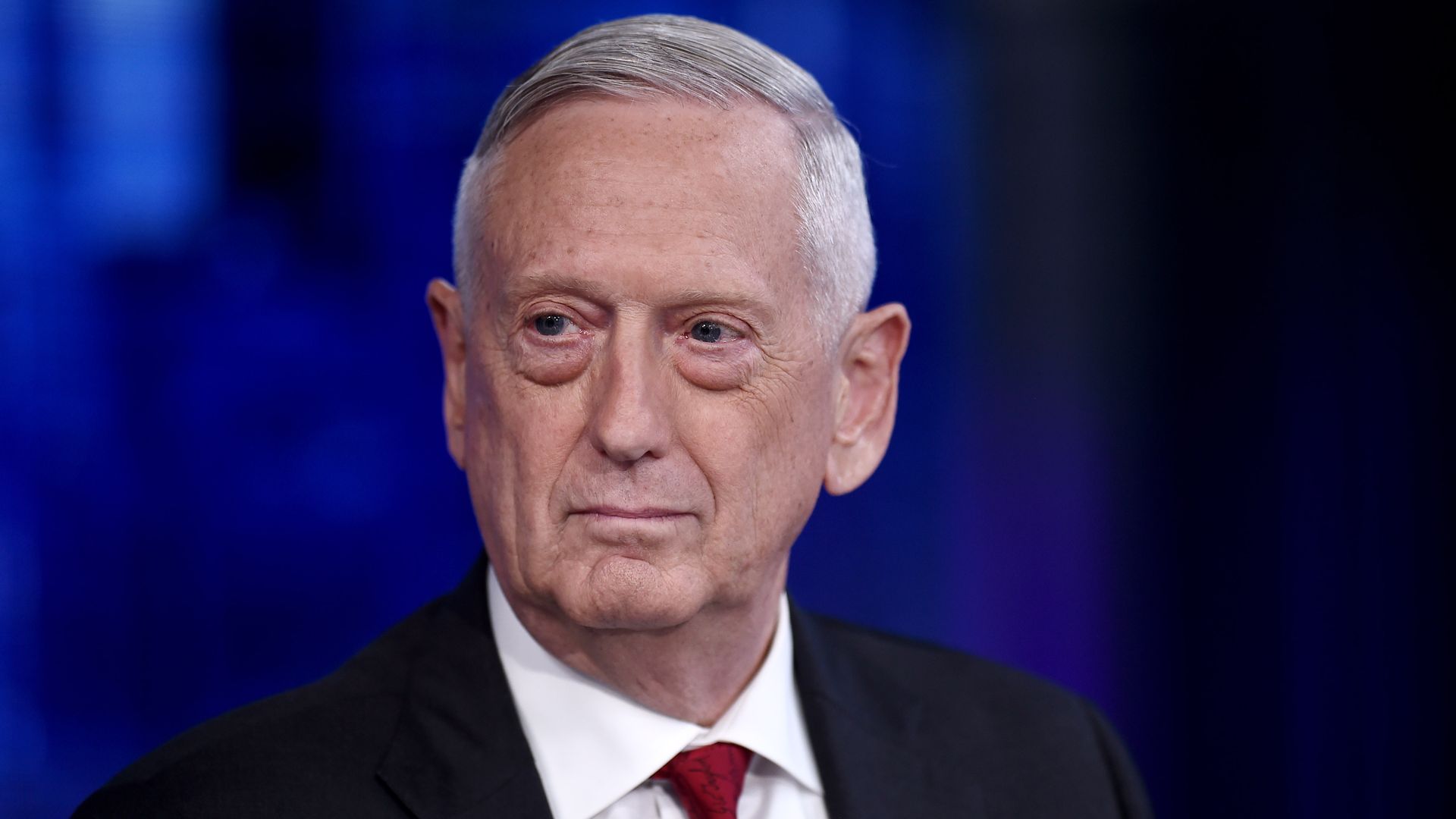
James Mattis condemns Trump as a threat to the Constitution


James Mattis
James MattisJames Mattis

Former Secretary of Defense James Mattis condemned President Trump for making a "mockery of our Constitution" in a statement to The Atlantic on Wednesday, saying he was "appalled" at the president's response to mass protests in the wake of George Floyd's killing.

Why it matters: Trump's former defense secretary had refrained from publicly criticizing his former boss since resigning in 2018.

Full statement:

"I have watched this week's unfolding events, angry and appalled. The words "Equal Justice Under Law" are carved in the pediment of the United States Supreme Court. This is precisely what protesters are rightly demanding. It is a wholesome and unifying demand—one that all of us should be able to get behind. We must not be distracted by a small number of lawbreakers. The protests are defined by tens of thousands of people of conscience who are insisting that we live up to our values—our values as people and our values as a nation.

When I joined the military, some 50 years ago, I swore an oath to support and defend the Constitution. Never did I dream that troops taking that same oath would be ordered under any circumstance to violate the Constitutional rights of their fellow citizens—much less to provide a bizarre photo op for the elected commander-in-chief, with military leadership standing alongside.

We must reject any thinking of our cities as a "battlespace" that our uniformed military is called upon to "dominate." At home, we should use our military only when requested to do so, on very rare occasions, by state governors. Militarizing our response, as we witnessed in Washington, D.C., sets up a conflict—a false conflict—between the military and civilian society. It erodes the moral ground that ensures a trusted bond between men and women in uniform and the society they are sworn to protect, and of which they themselves are a part. Keeping public order rests with civilian state and local leaders who best understand their communities and are answerable to them.

James Madison wrote in Federalist 14 that "America united with a handful of troops, or without a single soldier, exhibits a more forbidding posture to foreign ambition than America disunited, with a hundred thousand veterans ready for combat." We do not need to militarize our response to protests. We need to unite around a common purpose. And it starts by guaranteeing that all of us are equal before the law.

Instructions given by the military departments to our troops before the Normandy invasion reminded soldiers that "The Nazi slogan for destroying us…was 'Divide and Conquer.' Our American answer is 'In Union there is Strength.'" We must summon that unity to surmount this crisis—confident that we are better than our politics.
Donald Trump is the first president in my lifetime who does not try to unite the American people—does not even pretend to try. Instead he tries to divide us. We are witnessing the consequences of three years of this deliberate effort. We are witnessing the consequences of three years without mature leadership. We can unite without him, drawing on the strengths inherent in our civil society. This will not be easy, as the past few days have shown, but we owe it to our fellow citizens; to past generations that bled to defend our promise; and to our children.
We can come through this trying time stronger, and with a renewed sense of purpose and respect for one another. The pandemic has shown us that it is not only our troops who are willing to offer the ultimate sacrifice for the safety of the community. Americans in hospitals, grocery stores, post offices, and elsewhere have put their lives on the line in order to serve their fellow citizens and their country. We know that we are better than the abuse of executive authority that we witnessed in Lafayette Square. We must reject and hold accountable those in office who would make a mockery of our Constitution. At the same time, we must remember Lincoln's "better angels," and listen to them, as we work to unite.
Only by adopting a new path—which means, in truth, returning to the original path of our founding ideals—will we again be a country admired and respected at home and abroad."

--
****
Juan

CoronaTrump is a nasty virus, and if we distance ourselves like
Patriots, like a miracle it will all be gone in the Fall.

Something to Know - 3 June


Take your mind off of the shenanigans scripted by Barr, Dufus, and other shameless and scary people back in the nation's capitol.   Japanese whiskey tastes pretty good if you are into booze right now.   Take enough of it, and you will forget all the troubles.


Some Japanese Whiskies Aren't From Japan. Some Aren't Even Whisky.
Though the spirits have won praise and high prices, Japan has few rules for what those bottles should contain.


Japanese distilleries are increasingly coming clean about the foreign origins of their whisky. Several have adopted the label “world blend,” including Chichibu, which makes Ichiro’s Malt & Grain Whisky, second from right.
By Clay Risen
Published May 29, 2020
Updated May 30, 2020


Mamoru Tsuchiya is worried about the future of Japanese whisky. Sales are booming, but there's a problem: A large amount of the liquor isn't actually made in Japan, said Mr. Tsuchiya, one of that country's leading whiskey experts.
Some of it isn't whiskey at all.
"There are a lot of situations where you call it Japanese whisky, but they're using imported Scotch or Canadian whisky," he said.

Global demand for Japanese whisky has exploded over the last decade — bottles like the Yamazaki 18 Year Old, which once collected dust at $100, sell for five times the price and are now almost impossible to find. The dollar value of exports to America grew by nearly 50 percent in 2019 over the previous year, according to the Distilled Spirits Council of the United States.

Mamoru Tsuchiya
But unlike most whiskey-producing countries, Japan has few rules about what constitutes whiskey, let alone what makes it Japanese. Companies can buy spirits in bulk from abroad, bottle and label it "Japanese whisky," and ship it back out. They can export aged shochu made from grains, like rice or barley, for sale in America as whiskey. Some so-called distilleries don't even do any distilling; they import the whiskey in bulk and contract another company to bottle it.


It's a regulatory Wild West that both established distilleries and start-ups are taking advantage of to feed growing global demand. It's also a potential public-relations disaster: The internet is already rife with articles claiming to pull back the curtain on the myth of Japanese whisky.
While many of the premier brands, like Yamazaki and its 18 Year Old, point out that they are made exclusively in Japan, others refuse to say. "It puts Japanese whisky's reputation at risk," said Makiyo Masa, the founder of Dekanta, an online retailer.

In September Mr. Tsuchiya, who runs an advocacy organization called the Japan Whisky Research Centre, proposed a set of rules for Japanese whisky, including a requirement that it be distilled in Japan. The rules would be voluntary, but he planned to use the 2020 Tokyo Whisky and Spirits Competition, which he runs, as a carrot: Only products that met his criteria could enter as "Japanese whisky."

Mr. Tsuchiya said he had received support from most of the distilling industry, as well as the Japan Spirits and Liqueurs Makers Association, an industry-funded, government-chartered agency that helps set nationwide regulations.


But because of the coronavirus pandemic, the competition and Mr. Tsuchiya's proposed rules are on hold. While the industry and consumers wait to see what happens next, a new debate is underway: What is Japanese whisky, anyway?
Japan's laissez-faire regulatory approach is rooted, at least in part, in its complicated history with the West.

Its first recorded encounter with whiskey came in 1853, when Commodore Matthew Perry, during his inaugural visit to Japan, gave his hosts 70 gallons of Scotch and American whiskey. It was a hit among the imperial court, and the gift became a defining memory of a landmark cross-cultural encounter.

As part of its subsequent push to emulate the West, Meiji-era Japan encouraged the production of domestic versions of that same whiskey. Japanese distillers often used sweet potatoes, which were abundant, but they produced a much different spirit than the barley, corn and rye used in Scotland and America.

"From the get-go, Japanese whisky was not whiskey as the rest of the world understands it," said Liam McNulty, a Tokyo-based whiskey writer. No one gave much thought to defining it, he said, since it was entirely for domestic consumption. The bragging rights that came with having a homegrown whiskey industry, and whatever tax revenue it generated, were more important than the precision of the end product.

The first modern Japanese whisky distilleries, including Yamazaki, didn't open until the 1920s. While they were modeled on Scottish operations and often produced high-quality spirits, they did little to change the overall character of Japanese whisky, which, especially following World War II, was aimed at everyday salarymen looking for a quick drink after work.
The Japanese government introduced formal definitions for domestic whisky in 1989, but by then the industry was dominated by a few big distilling companies that wanted to keep the rules loose. After 1989, for example, whisky sold domestically had to contain at least 10 percent aged malt whisky; the rest could be unaged alcohol, typically made from imported molasses.


"The lack of regulation benefits major producers," said Stefan Van Eycken, the author of "Whisky Rising: The Definitive Guide to the Finest Whiskies and Distillers of Japan." "If the lack were a disadvantage to them, rules would be quickly be implemented."
Both domestically and internationally, interest in Japanese whisky began to pick up in the early 2000s, snowballing through the next 15 years as the industry's premium brands, like Hibiki and Yamazaki, racked up global critical acclaim. But distillers didn't have enough fully aged product to meet demand, leading many established and start-up brands to start buying in bulk from overseas.
Would you like recommendations for more stories like this?
Yes
The Japanese whisky industry can be opaque, so it is hard to know which distilleries rely on foreign sources. Still, analysts point to fast-growing exports of Scotch and Canadian whisky to Japan in recent years, even as the retail sales of those whiskeys remain flat — implying that most of the imported spirit is being bought by distilleries and relabeled as Japanese.
One company that has been open about its sources is Nikka, which makes whisky in Japan and owns the Ben Nevis distillery in Scotland. Emiko Kaji, Nikka's manager of international business development, said that domestic supply shortages force the company to use "a small amount of whiskey from overseas" to meet demand.

She also said that imported Scotch is a critical ingredient in creating Nikka's flavor profile, in the same way that an American baker might swear by French butter in making an apple pie.
"Unlike in Scotland, we do not have the custom of exchanging casks with other producers within the country," Ms. Kaji said. "In order to create a complex blended whisky to meet this demand, blenders in Japan needed to look outside our country for whisky to realize their visions."

Nevertheless, as more American whiskey fans learn that Japanese whisky isn't 100 percent Japanese, they're increasingly unhappy. Much of the critical praise over the past decade leaned on generalizations about Japanese craftsmanship and ingredients, and drinkers are understandably angry to learn that the whisky in their glass might not even be made in Japan.

Some distilleries are coming clean by labeling their whiskies "world blends," meaning a combination of imported and domestic products, said Flavien Desoblin, who carries several of these bottles at his two Manhattan whiskey bars, the Brandy Library and Copper and Oak. (These include Ao, from Suntory, one of the largest distilling companies in Japan, and Ichiro's Malt & Grain World Whisky, from Chichibu, a highly regarded craft producer.)
"I believe it's a great first step," Mr. Desoblin said. "Since we have to pay a premium for just about any whisky that comes from Japan, we need to be told the truth."
Mr. Tsuchiya wrote his proposed rules to move even further. They would re
quire distilleries to use only grain in their mash, ferment it with yeast (shochu uses a different process), distill it entirely in Japan, and then age it for at least two years in a wood cask.


"We require two years, instead of three like in Scotland, because in Japan we have a more temperate climate and whisky may age faster," he said.
So far, Japan's largest whisky companies have said they are receptive to Mr. Tsuchiya's proposal. But some experts question whether the industry will end up supporting it. Japanese whisky may have earned a global following, but its largest market is among everyday, value-conscious domestic drinkers who don't pay attention to technical details.


Mr. Van Eycken wonders if producers want to create a polarized landscape by explaining that Japanese whisky, their bread and butter, isn't what people thought it was. "Call me a skeptic, but from a business point of view, that's very unlikely."
He may be right. But if distillers end up rejecting Mr. Tsuchiya's proposals, it's possible that Japanese whisky's newfound fans will reject them in turn.
"They need to decide if their interests are good for the industry, or for consumers," said Yoshitsugu Komasa, who founded the Kanosuke distillery in southern Japan in 2017 and has pushed other craft producers to be more transparent. "If these rules are not adopted, I think things are going to get worse."
Craft Distillers Were Booming. Now They Face Bust.April 23, 2020

In the New World of Whiskeys, Australia Strives to Stand OutDec. 3, 2019

Follow NYT Food on Twitter and NYT Cooking on Instagram, Facebook, YouTube and Pinterest. Get regular updates from NYT Cooking, with recipe suggestions, cooking tips and shopping advice.
Correction: May 30, 2020

An earlier version of this article misstated one of Mamoru Tsuchiya's proposed rules for the distillers of Japanese whisky. It would allow distilleries to use any grain in their mash, not only barley.


--
****
Juan

CoronaTrump is a nasty virus, and if we distance ourselves like
Patriots, like a miracle it will all be gone in the Fall.

Tuesday, June 2, 2020

Somethingto Know - 3 June

A friend, Professor Andrew Gordon from the University of Washington, sent this to me today,  Anything from Andy is always something to be read; so here it is.  This is sent on Tuesday night, the 2nd.  This is the intro that he posted to me, and the article itself:

Not a fun read. Ominous even if Biden wins.

Staggering how much damage a terrible president can cause.


Insights, analysis and must reads from CNN's Fareed Zakaria and the Global Public Square team, compiled by Global Briefing editor Chris Good


Seeing this newsletter as a forward? Subscribe here.


June 2, 2020

As the US Burns, Has the Rest of the World Moved On?

To many, America's claim on global leadership has already seemed to absorb heavy blows in the Trump era. But as protests and disorder rage over the death of George Floyd, after a Minneapolis police officer knelt on his neck, Walter Russell Mead—who has been sympathetic to President Trump's foreign policy in the past—suggests in a Wall Street Journal column that we may be looking at the final straws: Covid-19, the current unrest, and their collision with Trump's diplomatic fecklessness.

"The problem isn't only that Russia, China and Germany don't see much point in trying to reach agreements with the current president. They likely believe that the triple threat of the pandemic, economic crash and civil unrest in the U.S. will promote an American withdrawal from global issues no matter who wins in November," Mead writes. "Recent events reinforce … beliefs in many foreign capitals that U.S. society has entered a period of dysfunctional chaos and that the American political system is no longer capable of providing consistent leadership in international affairs." Given the state of US politics, Mead warns of a near future in which opposing-party presidents undo each other's entire programs in successive terms, removing any consistency from America's agenda on the world stage.

One can imagine America's rivals in Russia and China as pleased: The US governance model has appeared shaky in the face of a pandemic, and the death of George Floyd has reminded everyone of deep inequities embedded in the country's vaunted democracy. (RT—formerly known as Russia Today, the state news outlet known for its propagandizing—seems to be noting the unrest with glee.) And at The Washington Post, Ishaan Tharoor notes statements of concern from the European Commission and African Union Commission, the latter decrying the "continuing discriminatory practices against Black citizens of the United States of America."

So far, there's been one bright side, as pointed out by Tharoor: Some have focused less on America's chaos and more on its activism, as solidarity with US protesters has shown through in places like Toronto, London, and Berlin.

Is America Headed for Something Better, or Something Worse?

That's the question Melvin Rogers asks, in a Boston Review essay, about the death of George Floyd and the protests and chaos that have followed. Rogers makes other points, including one echoed by New York Times opinion-page chief James Bennet: that President Trump didn't seem as concerned for law and order when white, anti-lockdown protesters—some of them armed—stormed their state capitol. But Rogers's main critique is that social peace is teetering in the US, and we don't know what will come next.

"In recent weeks, we've faced so many awful revelations: police brutality, the COVID-19 pandemic, the armed claims of individual sovereignty, and a president who plays to the darkest features of human nature and U.S. culture. All reveal the inability of our social and political culture to provide for the common good, and seem to suggest that collapse is close at hand. Indeed, the resources of our political and social culture—what we call democracy—can be exhausted, or at least appear to be exhausted," Rogers writes. "What opens—what is beginning right now in this country—is a profoundly unsettled space. Something might emerge, something better than what we have, something more satisfying, and more caring. … But authoritarianism could also fill the void—the president is already singing that song. … The danger is that we just don't know if the United States is convulsing because it wishes to be something new and better, or is raging to remain something old and twisted. We all should be worried and afraid, but not of the protesters. We should be concerned and fearful that the country may not have the courage to imagine differently, that it may not be able to separate the meaning of freedom from the taking of black lives. How ironic: the taking of black life built the country and that very same logic may bring the country to its knees."


George Floyd's Death and Covid-19: Injustice Upon Injustice

As has been widely noted, Covid-19 has hit African Americans particularly hardIn a New York Review of Books essay, Hugh Eakin writes of how that's playing out in Minneapolis—suggesting that if protests end up spreading Covid-19 among participants, and if riots harm an economy that already sees African Americans at a disadvantage, more injustice will be heaped onto George Floyd's death.

"[T]he greater tragedy of the Floyd killing, and its aftermath, may be yet to come," Eakin writes. "As the epicenter of the state's Covid-19 pandemic, Minneapolis was already contending with far-reaching health and economic issues when the unrest began. The virus itself has seemed to demonstrate the hidden racial injustice that many have long observed in the state: though they account for only 6 percent of the state's population, black Minnesotans have accounted for nearly 30 percent of known cases of the virus, according to data published in The Star Tribune this week" (though, as the paper noted, the state lacked racial data on thousands of cases). Citing stark economic imbalances along racial lines, Eakin writes that Minneapolis has so far taken the pandemic (and its economic fallout) "in stride"—but cases and deaths have been rising.

"Already, state health experts have warned that the large-scale protests this week could themselves lead to a rapid spike in infections. Equally hard to ignore has been the toll of the violence on local businesses, already struggling to survive during quarantine. In the neighborhood around the protest site, one particularly bitter outcome was the burning to the ground of a nearly finished, affordable housing complex that was supposed to be ready for occupancy later this year," Eakin writes. "It featured 189 units, of which several dozen had been designated for tenants of very low income. Now, it is razed."

Iceland's Maskless Success Against Covid-19

Mask-wearing isn't a priority in Iceland, Elizabeth Kolbert writes for The New Yorker, profiling the country's success against the virus: "We think they don't add much and they can give a false sense of security," Alma Möller, director of health in the country of just more than 352,000, tells Kolbert. "Also, masks work for some time, and then they get wet, and they don't work anymore."

But what has paid off—Reykjavík's contact-tracing team "had almost no one left to track" when Kolbert visited to report the story—has been organization and planning ahead, early on, for the worst. The country responded with a contact-tracing and isolation program, and Icelandic Prime Minister Katrín Jakobsdóttir cites early action, telling Kolbert: "We were following the news from China very closely … So we started our preparations long before the first case tested positive here in Iceland. And it was very clear from the beginning that this was something that should be led by experts—by scientific and medical experts. … I think one of the strengths of the process is that we just said, 'Well, we don't know what is going to happen next.'"


--
****
Juan

CoronaTrump is a nasty virus, and if we distance ourselves like
Patriots, like a miracle it will all be gone in the Fall.

Something to Remember - 2 June

This will live in infamy:

To be clear, the "right of the people to peaceably assemble" is codified in the First Amendment.


Yesterday, in Lafayette Park, hundreds of people did just that. Every news report and on site images confirmed this was a peaceful assembly.

But Trump wanted to create a three-part, orchestrated, authoritarian media spectacle.


Scene 1. Use federal employees, mounted and armed, who cannot say "no" to attack the legal citizens, assaulting them with pepper spray, rubber bullets, flash bangs and tear gas in order to clear a perimeter around the White House and a path to St. John's church.


Scene 2. Minutes later, Trump delivers a law and order speech at a time we need unity and healing, a speech filled with threats and references to delusional and illegal actions, meant to portray him as a tough leader.


Scene 3. Trump walks from the White House to St. John's church and stands, holding up someone's Bible, in a photo op intended to link his oppressive tactics with God, something reminiscent of many tyrants. The Episcopal diocesan bishop had not invited Trump and strenuously objected to the church being co-opted for an un-Christian purpose.


Trump made no mention of George Floyd, police brutality, the need for reform, black citizens' grief, fear and anger or the need for understanding and healing.


This all happened within an hour yesterday evening.


--
****
Juan

CoronaTrump is a nasty virus, and if we distance ourselves like
Patriots, like a miracle it will all be gone in the Fall.

Monday, June 1, 2020

Something to Know - 1 June

Bolstering opinions that the intrusion of Russian hackers into our democracy; our elections, our current looting and rioting, and creating divisions within our society, we have the following article from the NY Times.  We know it is happening, and I don't see it being called out as it should be, nor are we doing anything to stop it.   To make matters worse. the current administration appears to be enablers for Putin's campaign to disrupt and destroy.  These are not good times all the way around, and we need to figure out the best way to reverse the damage done.  Other than getting rid of the coward and corrupt guy in the White House, what else can we start doing right now?


Russia Trying to Stoke U.S. Racial Tensions Before Election, Officials Say

Russian intelligence services are trying to incite violence by white supremacist groups to sow chaos in the United States, American intelligence officials said.


President Vladimir V. Putin of Russia personally directed a vast cyberattack in 2016 aimed at helping deliver the American election to Donald J. Trump.Credit...Sputnik, via Reuters
  • March 10, 2020

WASHINGTON — The Russian government has stepped up efforts to inflame racial tensions in the United States as part of its bid to influence November's presidential election, including trying to incite violence by white supremacist groups and to stoke anger among African-Americans, according to seven American officials briefed on recent intelligence.
Russia's lead intelligence agency, the S.V.R., has apparently gone beyond 2016 methods of interference, when operatives tried to stoke racial animosity by creating fake Black Lives Matter groups and spreading disinformation to depress black voter turnout. Now, Russia is also trying to influence white supremacist groups, the officials said; they gave few details, but one official said federal investigators are examining how at least one neo-Nazi organization with ties to Russia is funded.

Other Russian efforts, which American intelligence agencies have tracked, involve simply prodding white nationalists to more aggressively spread hate messages and amplifying their invective. Russian operatives are also trying to push black extremist groups toward violence, according to multiple officials, though they did not detail how
Russia's more public influence operations, like state-backed news organizations, have continued to push divisive racial narratives, including stories emphasizing allegations of police abuse in the United States and highlighting racism against African-Americans within the military.


And as social media companies more vigilantly monitor for foreign activity than they did in 2016, Russia has also adjusted its methods to evade detection. Rather than disseminate messages as widely as possible, as in 2016, Russian operatives are using private Facebook groups, posts on the online message board 4chan and closed chat rooms that are more difficult to monitor, according to intelligence officials.

Russia's primary goal, according to several officials briefed on the intelligence who spoke on condition of anonymity to discuss sensitive information, is to foster a sense of chaos in the United States, though its motivations are under debate and difficult to decipher in the absence of high-level intelligence sources inside Moscow.

The direct effect of its interference on presidential politics is less clear, though some American officials said that Russia believed that acts of violence could bolster President Trump's re-election bid if he could argue that a response to such an episode demanded continuity and that he represented a law-and-order approach.

The F.B.I. and other intelligence agencies declined to comment on specific Russian activities.
"We see Russia is willing to conduct more brazen and disruptive influence operations because of how it perceives its conflict with the West," David Porter, a top agent on the F.B.I.'s Foreign Influence Task Force, said last month at an election security conference in Washington.
He added, "To put it simply, in this space, Russia wants to watch us tear ourselves apart."
Because Russia is trying to amplify the messaging of existing groups, its interference is difficult for American officials to combat given First Amendment protections for speech. The government does have the legal authority to stop hate speech that explicitly advocates violence, and social media companies continue to take down accounts linked to Russian intelligence or disinformation groups.


Attempts to exacerbate racial divisions are only one strand of Russia's influence operations in 2020; Moscow's intelligence agencies promote a variety of narratives and divisive issues. But perhaps no more difficult issue exists in the United States than racial justice and privilege, and officials expressed worry that amplifying divisions among races could do the most damage to the country's social fabric.
The Russian intelligence services took note of the divisive nature of the 2017 white supremacist march in Charlottesville, Va., which led to the death of a counterprotester, and concluded that promoting hate groups was the most effective method of sowing discord in the United States, according to American intelligence reports described by the officials.


Some American officials believe that Russia is trying to undermine American democracy and the nation's standing in the world by driving debate to the extremes.
"One of Russia's goals is weakening institutions and the weaponization of race is a way they can do that," said Laura Rosenberger, the director of the Alliance for Securing Democracy. "A divided America is a weaker America. When we are unable to solve our challenges together, Russia is more able to flex its power around the world."

American officials are divided about whether Russia is provoking racial division to influence the presidential election. Some officials think the effort is separate from any Kremlin effort to favor Mr. Trump. But others argue that Russian intelligence officials believe their efforts could help turn out more of Mr. Trump's core voters, though their understanding of American electoral politics is unclear.


The F.B.I. is scrutinizing any ties between Russian intelligence or its proxies and Rinaldo Nazzaro, an American citizen who founded a neo-Nazi group, the Base, according to former American officials. He lives in St. Petersburg, Russia, and is married to a Russian national, according to former government officials. The Guardian first reported his identity.
Going by the aliases Norman Spear and Roman Wolf, Mr. Nazzaro has said publicly that he and members of his group put less emphasis on campaigns to influence the public and more on developing military and survival skills.

Mr. Nazzaro bought property in Washington State in December 2018, a transaction that has come to the attention of the F.B.I. as part of its investigation into the Base. A left-wing anti-fascist group has said the Base intended to set up a training camp on the land.
The F.B.I. arrested three Base members in January ahead of a pro-gun rights rally in Richmond, Va. Three others in Georgia with ties to the hate group and another in Wisconsin were also arrested as part of the bureau's attempt to blunt its activities.

Russia or Russian oligarchs are already funding far-right groups in Europe, according to current and former officials. The Night Wolves motorcycle club has received support from Russians and has worked to sow chaos in Eastern Europe. The Russian Imperial Movement, another right-wing group with the implicit backing of Moscow, has sent fighters to eastern Ukraine, and other Russian organizations have offered weapons training to far-right groups in Europe.
The tactics date at least to the Cold War, when the Soviet Union tried to exacerbate racial tensions in the United States. "The most successful efforts in these kinds of interference activities are those that exploit real division," Ms. Rosenberger said. "Race is certainly one in the United States."

Independent researchers continue to identify social media accounts with Russian links. Race was among the top issues that such accounts tried to foster division over, said Young Mie Kim, a University of Wisconsin professor who studies political communication online. Others included nationalism, immigration, gun control and gay rights.


Ms. Kim tracked posts on Instagram last fall that used tactics similar to Russian operatives' 2016 efforts and confirmed that more than two dozen were Russia-linked. Facebook, which owns Instagram, subsequently took them offline.
"Russia's trolls pretended to be American people, including political groups and candidates," Ms. Kim wrote in a post for the Brennan Center for Justice. "They tried to sow division by targeting both the left and right with posts to foment outrage, fear and hostility. Much of their activity seemed designed to discourage certain people from voting. And they focused on swing states."

In addition to the social media posts, Russian-backed news organizations have also emphasized racially divisive themes, as have Russian government Twitter feeds, though it is only a small portion of their overall postings.

Russia Today, the television station controlled by the Kremlin, has fanned division on both sides. Last week, RT ran a story about a video of New York police arresting a black man that sparked outrage. The organization has also posted tweets aimed at stirring white animosity, publishing an article in January accusing The New York Times of hating white people and criticizing Hank Azaria for quitting as the voice of Apu on "The Simpsons" because of its stereotyping of South Asians.

Matthew Rosenberg contributed reporting from Washington, and Sheera Frenkel from San Francisco.
Julian E. Barnes is a national security reporter based in Washington, covering the intelligence agencies. Before joining The Times in 2018, he wrote about security matters for The Wall Street Journal. @julianbarnes • Facebook
Adam Goldman reports on the F.B.I. from Washington and is a two-time Pulitzer Prize winner. @adamgoldmanNYT

--
****
Juan

CoronaTrump is a nasty virus, and if we distance ourselves like
Patriots, like a miracle it will all be gone in the Fall.