
The Prescience of Epstein
Epstein was ahead of the curve: the shape of patriarchal exploitation and sexual abuse is changing.
Content warning: child sexual abuse and rape; misogynistic violence
On Sunday, the brilliant writer Celeste Davis published an essay stating an important and obvious truth: the common denominator in sexual abuse is patriarchy. What Epstein and Sean Combs and Dominique Pelicot and Harvey Weinstein and Larry Nassar and so many other notorious sexual predators have in common is not extreme wealth and power, which is a factor in some of these cases but not others. It is true, of course, that Epstein's sex trafficking operation and systematic abuse and rape of children went farther and wider than most because of his power, privilege, and connections. But we need to be clear about the fact that these factors only amplified what was there already: they didn't create a problem out of nowhere. Some very ordinary men without any particular cachet or capital not only rape: they recruit others to do so; they bond over abusing women; and they are aided and abetted by many others in the process.
What we are seeing exposed hence must be a product of patriarchy more than anything else, just as Davis argues. My "yes, and" addition, as someone who has been analyzing patriarchal systems of oppression for well over a decade in my day job as a philosopher, is that patriarchy is a multifaceted thing, and that the particular shape it is taking here is less proprietary and puritanical than we often think of it as being. Girls and women are being treated as human and sexual property, yes, but of the form that may be rented out and traded rather than jealously safeguarded. It is a particular kind of capital that is a basis for male bonding and camaraderie, rather than strenuous competition—and it is easily disposed of rather than hoarded as something precious. The norms are neither better nor worse than the norms of traditional archetypical patriarchal marriage, but they are importantly distinctive. And there is reason to think that, far from being a thing of the past, these new norms are gaining prominence and resulting in a potent sense of female fungibility.
Take the case of Dominique Pelicot, who routinely raped his wife Gisèle Pelicot and spent almost a decade drugging her and inviting strangers into their bedroom in order to rape her while she was unconscious. As Davis points out, and as I've written about before, the most shocking aspect of the case is that Dominique Pelicot was able to recruit well over fifty strange men in his small town in the South of France to rape his unconscious wife. None of the men he recruited fled the scene when they noticed her passed out and snoring. Only one of them did not go through with the planned rape and merely sexually assaulted her. None of the men tried to report Dominique Pelicot's crimes or even sent Gisèle an anonymous letter detailing them. None of the men appeared to feel particularly guilty during the court case, even though they were incentivized to repent publicly within the French legal system, per Manon Garcia.
In my work on this case, I've argued that what explains these misdeeds is a sense of male entitlement that is a crucial part of patriarchy. Specifically, as I write in my forthcoming paper, "Ordinary Cruelty":
At some level, Dominique Pelicot knew that his wife was not in fact his property: but, when there was a conflict between his will to violate her, and her will not to be violated, there was no real contest. "No one belongs to anyone else, but I did what I wanted when I had the urge. That's what's at the heart of this story," he testified in the courtroom. If her suffering was the price of his satisfying himself, then so be it. His is an indifference that is well-termed not only cruel but studied: a deliberate riding roughshod over his wife's recognized humanity in order to get what he wanted. He felt entitled to have it—and her, in the process.
The same is true of the men Dominique prevailed on to rape Gisèle Pelicot. As I write there:
They acted out of the sense that women are the distinctively human property of their husbands. There are again false moral ideas at the heart of ordinary human cruelty: that Dominique Pelicot was entitled to treat his wife in this way. That these men were entitled to take advantage of this set-up. The women they rape are, after all, subject to norms of sexual ownership within patriarchal marriage. They are hence regarded as quite properly exploited and controlled by their husbands. Often, he will be jealously possessive of his wife's body; sometimes, however, he will be licentious and generous with it in service of his own satisfaction.
You could see this case as an anomaly, and Dominique Pelicot as an aberration. But you would be mistaken. Over 32 000 men belonged to the prominent Italian Facebook Group "Mia Moglie" (My Wife), where users shared intimate photos of their female partners non-consensually and invite hideously misogynistic and violent commentary on their bodies. The group was shut down by Meta last August. But new ones keep cropping up, and form a broader, persistent network of online forums and social media channels dedicated to such content.
Men bonding over misogyny is of course nothing new. Neither is sexual trafficking and the exploitation of sex workers by the men colloquially known as pimps and euphemistically as managers. But there is something about the proliferation of norms of sexual sharing that marks a departure from patriarchal marriage in its archetype. Typically, under patriarchy, a man enjoys the services and attentions of one woman, his wife, who can feed him, fuck him, patch him back up and put him back together to fight or work another day in perpetuity. Militaristic capitalism has long depended on this model, where a large proportion of women end up being jealously safeguarded to protect their sexual purity and preserve their property value by their fathers and then their husbands. Men compete for these women and they by and large do not share them. The categories of wives and of sex workers are more or less strictly separated in theory if not in practice, and reflect invidious distinctions of class, race, and cultural capital.
But what one finds in the Epstein files is a kind of preview of what was to come, and what we are now seeing unfolding. Men bond in deep—and deeply disgusting—ways over their sharing of girls and women and their enabling of each others' sexual abuse of them. They share the kind of intimacy and friendship that those hand-wringing about male loneliness (which my brilliant student Ryan Bollier has in his crosshairs) can currently only dream of. It's not just locker room talk; it's a shared sport and lifestyle. It's as if the fear of homosociality and even queerness is allayed by all the raping (gallows humor).
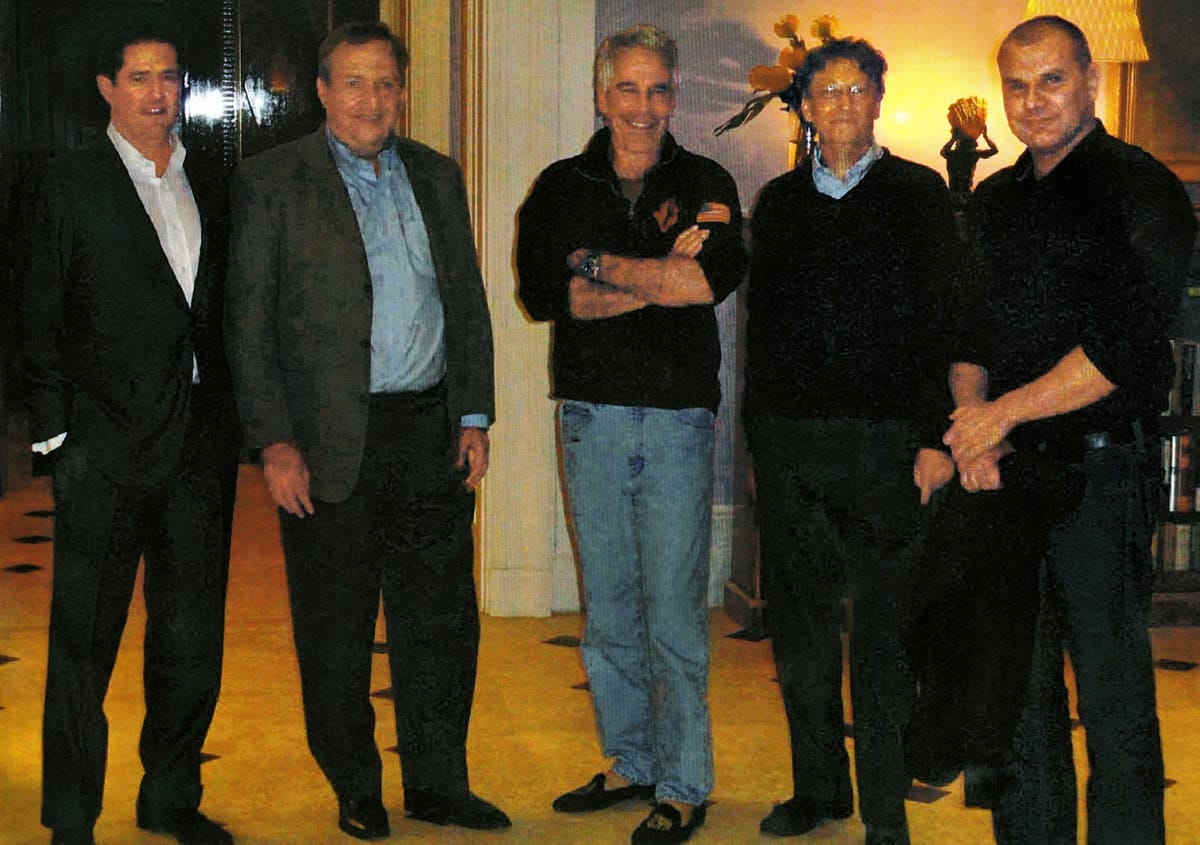
Image credit: The New York Times
There's no doubt that pornography has played a major role in this shift, and in the degradation of girls and women generally. We see boys bonding over creating pornographic deepfakes of their female classmates using AI; we see them making lists comparing and ranking the bodies of every girl they go to school with; we see them congregating on incel forums to moan about sexual deprivation. Boys and men are doing this to girls and women, and almost never vice versa. They are doing this in groups, and they are doing so with impunity—and precious little in the way of the anti-entitlement education that might serve as a bulwark here. We make a mistake again though to think that pornography and the internet have created these problems. Look back at the Epstein files and you can see the future.

More to Hate
Misogyny and more

No comments:
Post a Comment