
|
3:13 AM (6 hours ago)
|
|
||
|
||||


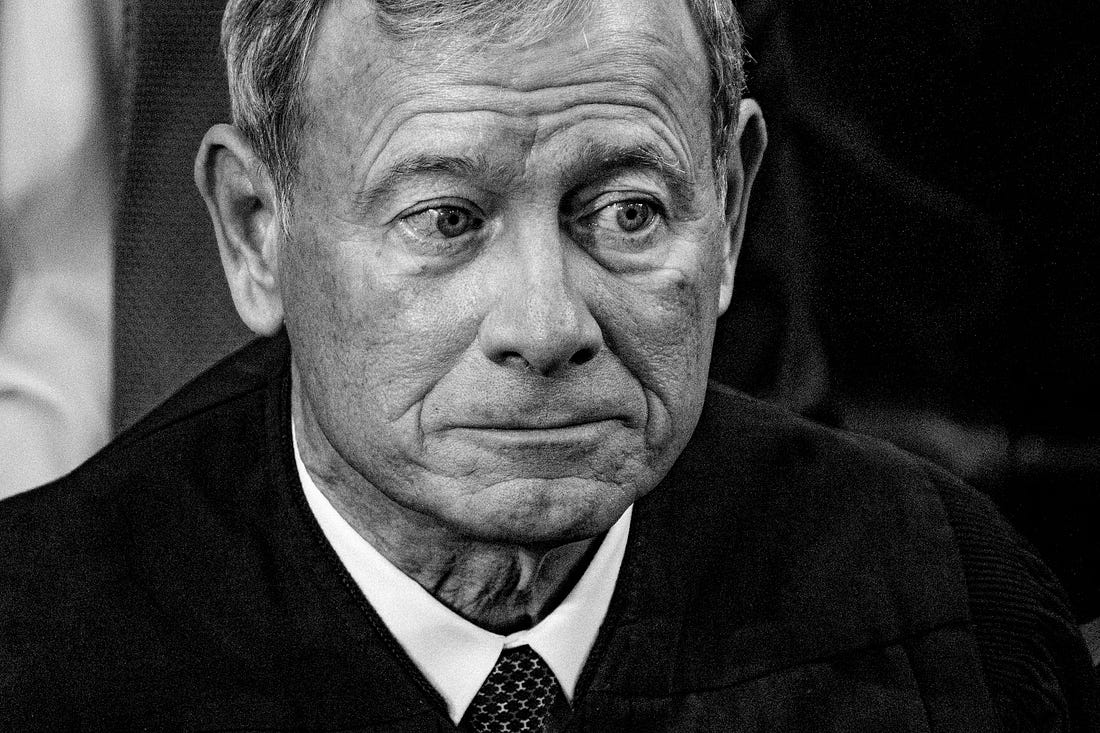
How John Roberts Court Made Bribery LegalU.S. Code 666 and the John Robert's Court.
Here is how you legally purchase a government official in the United States. You meet with the official privately and tell them what you want. You give them gifts, like fur coats and Ferraris, and you keep giving. The only thing you never do is say the item is payment for a specific vote. This is federal law after the Supreme Court finished with it. James Snyder was the mayor of Portage, Indiana. In 2013, the city awarded contracts worth $1.1 million to Great Lakes Peterbilt, a local truck company. In 2014, a company executive wrote Snyder a check for $13,000. Federal prosecutors called it corruption and a jury agreed. Snyder went to prison. In June 2024, the Supreme Court overturned his conviction. Justice Brett Kavanaugh, writing for six justices, explained that Section 666 of the federal criminal code covers bribes but not gratuities. A bribe is a payment made before an official act to influence it. A gratuity is a payment made after an official act as a token of appreciation. The $13,000 came after. Therefore it was a tip, not a bribe. Kavanaugh worried that a broader reading might criminalize innocent conduct. “Is a $100 Dunkin’ Donuts gift card for a trash collector wrongful?” he asked. “What about a $200 Nike gift card for a county commissioner who voted to fund new school athletic facilities?” Justice Ketanji Brown Jackson, dissenting, had a different view. “Snyder’s absurd and atextual reading of the statute is one only today’s Court could love,” she wrote. The law explicitly targets officials who accept payments “intending to be influenced or rewarded.” Everyone knows what a reward is, and Congress meant to criminalize it. “Officials who use their public positions for private gain threaten the integrity of our most important institutions,” Jackson continued. “Greed makes governments, at every level, less responsive, less efficient, and less trustworthy from the perspective of the communities they serve.” The majority was unmoved. The distinction between bribes and gratuities now governs federal corruption law. A payment before the act sends you to prison. A payment after sends you on vacation. This used to be illegal. For decades, Section 666 was the workhorse federal anti-corruption statute. Courts understood that corruption did not require an explicit exchange. In 2003, the Supreme Court itself said so. In McConnell v. Federal Election Commission, Justices Stevens and O’Connor wrote that Congress’s legitimate interest “extends beyond preventing simple cash-for-votes corruption to curbing undue influence on an officeholder’s judgment, and the appearance of such influence.” Corruption was not confined to bribery. It included the subtler rot that occurs when money purchases access and access purchases outcomes. That understanding is now dead and the Roberts Court killed it. Citizens United v. Federal Election Commission in 2010 changed what corruption meant in some ways that even those who are familiar with the case are often unaware of. Many people know that Justice Anthony Kennedy, writing for five justices, declared that corporations have First Amendment rights to spend unlimited sums on elections. The detail that is shared less often is that Kennedy redefined the government’s anti-corruption interest. “Ingratiation and access are not corruption,” he wrote. He dismissed the concern that donors might gain influence over officials: “The appearance of influence or access will not cause the electorate to lose faith in this democracy.” Only explicit quid pro quo exchanges counted. The broad understanding from McConnell, decided just seven years earlier, was gone. McCutcheon v. Federal Election Commission in 2014 continued the Roberts Court trend. Chief Justice John Roberts struck down aggregate limits on how much one person could contribute to all federal candidates combined. He recast what McConnell had called corruption as a democratic virtue. “Ingratiation and access,” Roberts wrote, “embody a central feature of democracy, that constituents support candidates who share their beliefs and interests, and candidates who are elected can be expected to be responsive to those concerns.” Government “may not target the general gratitude a candidate may feel toward those who support him.” Relabeling bribes as gratitude is quite the claim. McDonnell v. United States in 2016 extended this logic to criminal prosecutions. Bob McDonnell, the former governor of Virginia, had accepted more than $175,000 in gifts and loans from a businessman seeking state help with his dietary supplement company. The gifts included a Rolex and the use of a Ferrari, and his wife received Oscar de la Renta gowns. McDonnell arranged meetings with state officials, hosted events at the governor’s mansion, and made phone calls on the businessman’s behalf. A jury convicted him of corruption. The Supreme Court unanimously reversed that decision. Roberts, writing for all nine justices, held that arranging meetings, making phone calls, and hosting events do not constitute “official acts” under federal bribery law. An official act must involve “a formal exercise of governmental power” on a “specific and focused” matter pending before the government. Using your office to help someone who has showered you with gifts does not qualify unless you take or promise a specific formal action. “There is no doubt that this case is distasteful,” Roberts acknowledged. “It may be worse than that. But our concern is not with tawdry tales of Ferraris, Rolexes, and ball gowns.” Then came Snyder, and the rules were now complete. Citizens United and McCutcheon narrowed corruption in campaign finance law. McDonnell and Snyder narrowed it in criminal law, the first by limiting what counts as an official act, the second by exempting any payment made after the act. Anyone seeking to purchase official action can do so legally. The buyer waits until afterward and never says the obvious thing out loud. The conservatives on this Court claim to be originalists, bound by the original public meaning of the Constitution. On corruption, they have betrayed that project entirely. The founders were obsessed with corruption. The word appears more than fifty times in the Constitutional Convention debates. On June 23, 1787, George Mason told his fellow delegates, “If we do not provide against corruption, our government will soon be at an end.” He warned against putting “a man of virtue in the way of temptation.” He worried about venal officials and about the conditions that could compromise even honest ones. Alexander Hamilton devoted Federalist No. 68 to the danger. “Nothing was more to be desired than that every practicable obstacle should be opposed to cabal, intrigue, and corruption,” he wrote. “These most deadly adversaries of republican government might naturally have been expected to make their approaches from more than one quarter.” In Federalist No. 22, Hamilton observed that republics “afford too easy an inlet to foreign corruption.” The founders understood corruption broadly. They saw it in the dependency a gift creates, and in the gratitude that clouds judgment even when no price is named. The thinkers they read, Blackstone and Montesquieu among them, defined it the same way. Blackstone’s Commentaries described bribery as occurring when a judge “takes any undue reward to influence his behavior in his office.” His test was met by an undue reward and the intent to influence, with no explicit bargain required. Federal corruption prosecutions peaked at 1,304 defendants charged in 2008. By 2023, that number had fallen to 543, a decline of 58 percent. McDonnell has been cited in numerous subsequent cases seeking to overturn convictions. The decision led directly to the reversal of convictions for former New York Assembly Speaker Sheldon Silver and former New York Senate Majority Leader Dean Skelos. After Snyder, federal prosecutors can no longer charge state and local officials with accepting gratuities under Section 666 at all. They must prove an explicit agreement existed before the official act. The law now requires what sophisticated corruption never provides: a paper trail. The justices who narrowed this law accept the gifts it now permits. Clarence Thomas took two decades of undisclosed travel and gifts from billionaire Harlan Crow, and Samuel Alito flew to Alaska on the private jet of a hedge fund billionaire whose firm later won a $2.4 billion case before the Court. The Trump administration has done more than the Court. Since January 2025 it has cut the Justice Department’s Public Integrity Section, the unit that prosecutes corrupt officials, from 36 attorneys to two by 2026, and reduced its open corruption cases from as many as 200 to about 20. When prosecutors were ordered to drop the federal corruption case against New York Mayor Eric Adams in February 2025, seven of them resigned rather than sign the dismissal. Trump has pardoned at least 15 former officials and their associates who had been charged with or convicted of corruption. The Court made the gifts legal. The administration is making sure no one is left to ask about them. The justices have simply defined corruption so narrowly that buying an official with gifts falls outside it. The Court says gratitude and influence are a central feature of democracy, and that they will not cause the electorate to lose faith. The founders knew better. They understood that corruption operates through dependency, through the slow accumulation of obligation that bends judgment without any explicit exchange. They worried about putting virtue in the way of temptation, so they prohibited gifts of any kind whatever. They did this because they had studied how republics die. The Roberts Court has overruled the founders. It has constructed a permission structure for the very conduct the Constitution was designed to prevent. The rule is simple enough for anyone to follow: you pay after, and you never say the thing. That is the law now. What’s the solution? States take a stand on jurisdiction. Most states already criminalize bribery, and a state’s bribery law is not bound by McDonnell or Snyder, because those decisions interpreted federal statutes. Most states can prosecute the bribery in this article right now. Nothing requires them to defer to the federal government. If a federal official gets a DUI in your state, you do not hand the case to the Justice Department and call it a federal matter. You prosecute it, because the crime happened in your state. Corruption is no different. Deferring to the federal government is a choice the states have made, and they can make a different one. Two things make state prosecution possible. A state and the federal government are separate sovereigns, so a state charge is independent, and a president cannot pardon a state crime. Accepting a bribe is no part of any official duty, so federal office provides no immunity from a state corruption charge. The element most states still lack is a law against the reward paid after the act, the conduct Snyder exempted from federal law. At the Existentialist Republic, we have created a piece of model legislation to address this gap. The Bribe Is a Bribe Act criminalizes that reward and restores the official-act definition McDonnell narrowed. It also gives a state attorney general more clear authority to investigate and prosecute corruption. If we do that for political corruption, we get our country back. If we whine about jurisdictions and overreach, we keep losing while the bad guys consolidate. Let’s get after it. You can find the fully shareable Bribe Is a Bribe Act by clicking on this sentence. If you have already advocated for this bill, that is fantastic. Here are a few more ways you can help make this a reality. You can ask your state representatives for a meeting. Comment on this article if you have questions, comments, or advice to share. You could also ask your county Democrats, Indivisible chapter, or any other group to consider endorsing it so they can share it with candidates and representatives as part of their platform moving forward. Comment on this article if you have questions, comments, or advice to share. You could even print it on posters and place them on a Republican representative’s office door to give that representative an early Halloween scare. You can handle this one if you want. You can be the reason this all gets to continue. It’s 10 people like yourself, 10 per article who subscribe by clicking the button below, that fund all of this. All 3 free books, all 12 booklets, the 4 pieces of model legislation, and the 20-40 articles per month. Don’t let this be the reason you miss a meal or are late on rent. But if this helps you and you can become a subscriber, you’re one of the 10 that makes it all possible. |



No comments:
Post a Comment